
Experts And Residents Highlight The Importance Of Native Plants For Pollinators
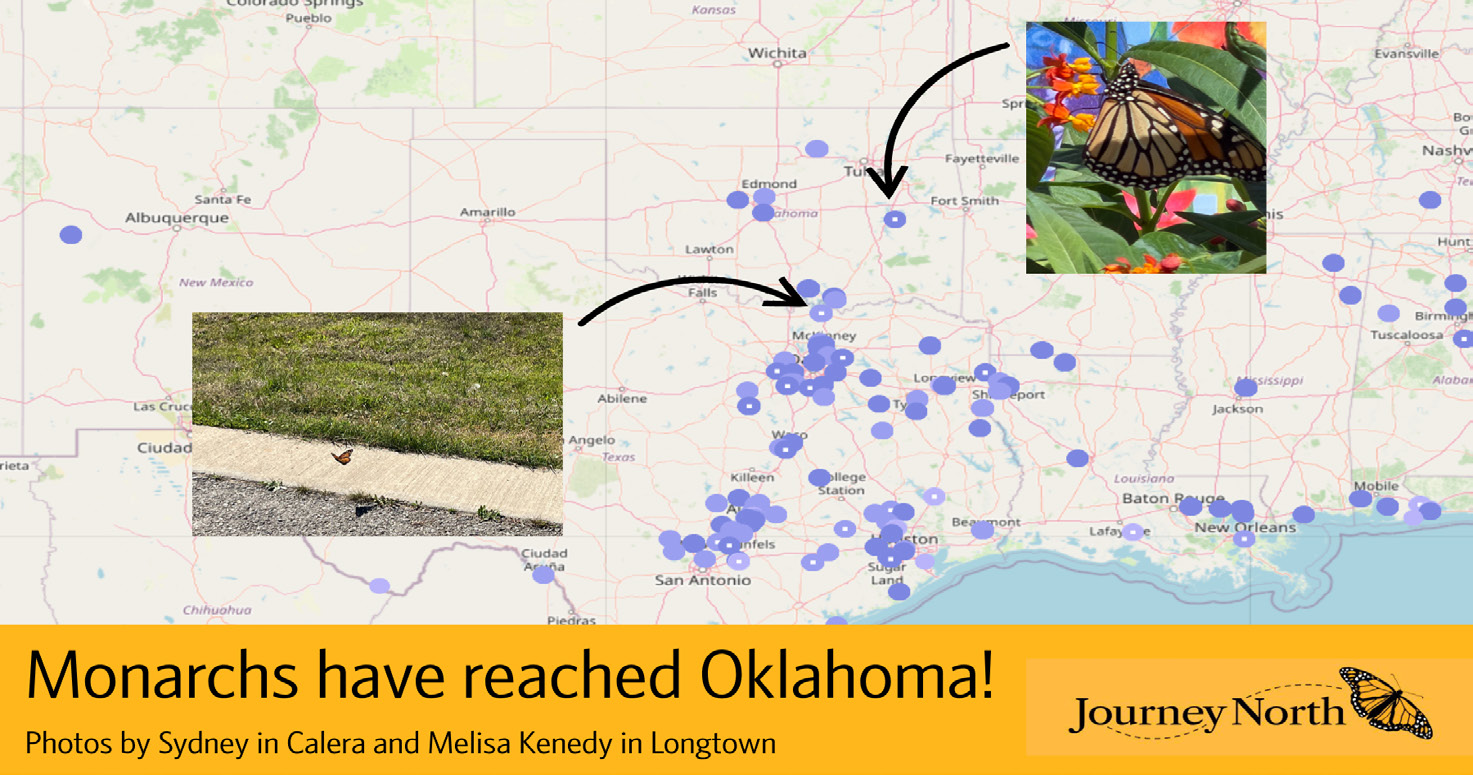
Oklahoma City, OK – [March 24, 2026], On March 8, Wynell Lloyd of Calera, Oklahoma, and her daughter, Raquel Collings, were astonished to spot a tattered monarch butterfly nectaring on clover—remarkably early in the season. Wynell rushed inside to grab her camera, but by the time she returned, the butterfly had already moved into a neighbor’s yard. Since then, multiple monarch sightings have been reported across Oklahoma, including the first monarchs photographed this past weekend—one in Longtown near Eufaula and another in southern Oklahoma in Calera.
Butterfly Conservation in Calera
This mother-daughter duo’s interest in butterflies began in Yukon, Oklahoma, and grew after they moved to Calera. After Wynell retired, she was looking for something to be passionate about—and butterflies became that passion. In 2019, they began creating a monarch habitat on their property.
“Okies for Monarchs was one of the first resources we turned to for information and guidance,” Wynell said. “From there, we started studying monarchs, planted milkweed, and became certified with the National Wildlife Federation as a certified wildlife habitat.”
Today, their Calera habitat includes at least 50 milkweed plants, already 2–3 inches tall, along with a wide variety of other native flowers. They are continuing their second year of cold-stratifying milkweed and other native seeds to support local pollinators, and on March 22, they observed two monarchs mating in their yard and two more in a neighbor’s yard—looking forward to welcoming even more butterflies this spring.
Expert Guidance on Early-Blooming Natives
This past weekend, Dr. Patrick Bell, board member of the Oklahoma Monarch Society, observed at least six monarchs on his Tishomingo farm.
“There isn’t a lot of nectar available early in the season, so monarchs and other pollinators depend on early-blooming plants to get the fuel they need until milkweed, the monarch’s host plant, emerges,” Bell said.
He recommends native trees like dogwoods, plums, and redbuds, as well as plants such as golden ragwort, woodland or prairie phlox, and Missouri violets.
“Early-season nectar is critical for monarchs and other pollinators,” Bell added. “Plants like spring beauties and common ‘weeds’ such as henbit and dandelions also provide important resources, though they generally appear on their own rather than being intentionally planted.”
Native plants typically aren’t available at big box stores, but can be purchased from local native plant vendors or grown from seed at home.
How Oklahomans Can Help Monarchs
Planting native milkweed and wildflowers is essential for monarch survival. Milkweed is the monarch’s host plant—females lay their eggs exclusively on it, and it is the only food source for their caterpillars—while native wildflowers provide the nectar adults need to fuel their long migration. Without milkweed, there are no monarchs.
When purchasing native plants, only buy from nurseries that do not use systemic insecticides such as neonicotinoids (Neonics) or other pesticides, which can harm pollinators, including monarchs and their caterpillars. Guidance on what to plant, where to buy native plants, and statewide plant sales is available at okiesformonarchs.org.
Report Your Monarch and Milkweed Sightings
As monarchs migrate through Oklahoma, you can act as a community scientist by reporting sightings of adults, caterpillars, eggs, and milkweed emergence to journeynorth.org.
These observations help researchers track migration timing, population trends, behavior, and habitat use, while informing conservation efforts. Submitting clear photos improves data quality and helps verify sightings.
You can also explore Journey North’s interactive migration map to see where monarchs are currently being reported.
